

If your surgeon has told you to lose weight before your operation, you are likely wondering exactly what a preoperative weight loss diet looks like, how it works, and whether it is truly necessary. The short answer: yes, it is. A preoperative weight loss diet is one of the most clinically impactful steps you can take to make your surgery safer and your recovery faster. The guide has all that you should know.

What Is a Preoperative Weight Loss Diet?
A preoperative weight loss diet is a structured, calorie-controlled eating plan your surgical or medical team prescribes before a planned operation. It is designed to reduce total body fat, particularly visceral fat stored around internal organs, so that your body is in the best possible condition when you go into surgery.
Unlike general weight-loss diets you might find in popular media, a preoperative weight loss diet has specific clinical targets. Your surgeon may be trying to:
- Shrink an enlarged liver so it does not obstruct access during laparoscopic procedures
- Lower your BMI to meet the threshold required for elective surgery
- Improve blood glucose control and reduce cardiovascular strain before anesthesia
- Reduce the volume of visceral fat that surrounds the organs being operated on
The duration and intensity of your preoperative weight loss diet will vary based on your surgery type, current weight, and how much time you have before the scheduled procedure. Some patients follow a modified low-calorie diet for several months; others are placed on a strict high-protein liquid diet for 2–4 weeks immediately before surgery.
Why a Preoperative Weight Loss Diet Matters
The benefits of following a preoperative weight loss diet are well-documented in clinical research. Here is what the evidence says about why this diet is prescribed and what it achieves:
It Shrinks the Liver
This is the most frequently cited reason surgeons prescribe a preoperative weight loss diet, particularly before bariatric and abdominal surgeries. Excess body fat accumulates inside the liver, a condition called hepatic steatosis or fatty liver disease, causing it to enlarge significantly. An enlarged, fatty liver sits directly over the stomach and intestines, making laparoscopic access difficult and dangerous.
A preoperative weight loss diet high in protein and low in carbohydrates forces the liver to burn through its stored glycogen and fat, shrinking it by up to 20% in as little as 2–4 weeks. This improvement makes a dramatic difference in surgical access, operative time, and safety.
It Improves Anesthesia Safety
Anesthesiologists must carefully calculate drug doses based on a patient’s weight and body composition. Excess adipose tissue changes how anesthetic drugs are absorbed, distributed, and metabolized. Patients with higher body weight are at greater risk of airway complications, prolonged sedation, and respiratory depression during surgery. A preoperative weight loss diet directly reduces these risks by improving body composition before anesthesia is administered.
It Reduces Postoperative Complications
Patients who complete a preoperative weight loss diet before surgery consistently show lower rates of postoperative complications. These include:
- Wound infections and poor incision healing
- Blood clots in the legs or lungs (DVT and pulmonary embolism)
- Pneumonia and breathing difficulties after surgery
- Extended hospital stays
- Reoperation rates
It Improves Blood Sugar and Metabolic Health
Many patients requiring surgery have underlying insulin resistance or type 2 diabetes, both of which impair healing and increase infection risk. A preoperative weight loss diet, particularly one that reduces carbohydrate intake, can meaningfully improve blood glucose control within weeks, making the body’s post-surgical healing environment significantly safer.

What to Eat on a Preoperative Weight Loss Diet
The foundation of any preoperative weight loss diet is high-quality protein, non-starchy vegetables, controlled healthy fats, and adequate hydration. Here is a detailed breakdown of each category:
Protein: The Most Important Macronutrient
Protein is the single most critical component of a preoperative weight loss diet. It preserves lean muscle mass during caloric restriction, supports tissue repair after surgery, stabilizes blood sugar, and keeps you full between meals. Most preoperative diet protocols target 60–100 grams of protein per day on a food-based plan, or up to 120 grams per day on a protein shake-based liquid plan.
Best protein sources for your preoperative weight loss diet:
- Chicken breast and turkey (skinless) – approximately 30g of protein per 150g serving
- White fish: cod, tilapia, haddock, pollock – lean, low-calorie, high-protein
- Salmon and tuna – add anti-inflammatory omega-3 fats alongside quality protein
- Eggs and egg whites – versatile, affordable, and nutrient-dense
- Low-fat Greek yogurt and cottage cheese – high protein, low sugar (check labels)
- Whey protein isolate shakes – essential for liquid-phase preoperative diets
- Tofu and edamame – strong plant-based options

Non-Starchy Vegetables
Non-starchy vegetables are the backbone of your plate on a preoperative weight loss diet. They are low in calories, high in fiber, and packed with the vitamins and minerals your body needs to prepare for surgery. There is virtually no upper limit on how many non-starchy vegetables you can eat – they fill you up without contributing meaningfully to your calorie intake.
Recommended vegetables for your preoperative weight loss diet:
- Leafy greens: spinach, kale, rocket, romaine lettuce, Swiss chard
- Cruciferous vegetables: broccoli, cauliflower, Brussels sprouts, cabbage
- Zucchini, cucumber, celery, bell peppers, asparagus
- Green beans, mushrooms, onions (cooked), tomatoes
Healthy Fats – In Controlled Amounts
Healthy fats are not eliminated on a preoperative weight loss diet, but they are carefully controlled because they are calorie-dense. Including the right fats supports hormonal balance, vitamin absorption (particularly fat-soluble vitamins A, D, E, and K), and satiety.
Appropriate healthy fat sources on a preoperative weight loss diet:
- Avocado: limit to one-quarter to one-half per day
- Extra-virgin olive oil: 1–2 tablespoons for cooking or dressings
- Almonds and walnuts: a small palmful as a snack – no more
- Chia seeds and ground flaxseeds: add to shakes or yogurt for omega-3s and fiber
Hydration
Water is a non-negotiable part of your preoperative weight loss diet. Adequate hydration supports kidney function, metabolic rate, and bowel regularity – all of which are important before surgery. Aim for a minimum of 64 ounces (8 cups) of water daily. Herbal teas and plain sparkling water count toward your total. Coffee in black form is generally permitted but should be limited to 1–2 cups per day.
What to Avoid on a Preoperative Weight Loss Diet
What you remove from your diet is just as important as what you add. The following foods and drinks directly undermine the goals of your preoperative weight loss diet – they cause liver enlargement, blood sugar spikes, inflammation, and fluid retention that all increase surgical risk.


7-Day Preoperative Weight Loss Diet Meal Plan
The following sample plan provides approximately 1,200–1,500 calories and 70–90 grams of protein per day. This is a general template – your surgeon or dietitian may modify it significantly based on your specific procedure, health conditions, and timeline. Always use this as a starting framework, not a final prescription.
Day 1

Day 2

Day 3

Days 4–7: Rotation Principles
For days 4 through 7, rotate your protein sources across fish, eggs, chicken, turkey, and tofu. Keep all vegetables non-starchy. Maintain the same three-meal, one-snack structure. Do not skip meals – regular eating intervals prevent blood sugar crashes, protect muscle mass, and keep your metabolism stable throughout your preoperative weight loss diet.

How Long Should You Follow a Preoperative Weight Loss Diet?
The length of your preoperative weight loss diet depends on your surgery type, your current BMI, and your surgeon’s specific protocol. Here are the most common timelines:
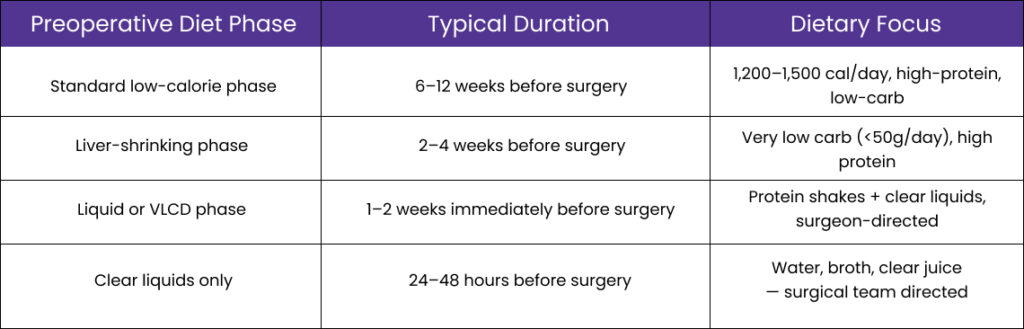
If you have been given a specific preoperative weight loss diet protocol by your surgical team, follow that protocol exactly. Do not substitute your own judgment for your surgeon’s instructions, particularly in the final 2 weeks before your procedure.
How Much Weight Should You Lose Before Surgery?
There is no single universal target for a preoperative weight loss diet. The amount of weight you need to lose before surgery depends on the type of operation, your starting BMI, and your surgeon’s protocol. However, these general benchmarks apply to most surgical patients:
- Most bariatric surgery programs require 5–10% of total body weight lost before the procedure
- Orthopedic surgeons often require a BMI below 40, and many prefer below 35, before proceeding
- General surgeons performing abdominal procedures may set custom weight targets based on imaging
- Even a 5% reduction in body weight can meaningfully improve liver size, blood pressure, and blood glucose
The most important number to focus on is the one your surgeon gave you. If no specific weight target was provided, ask your surgical team directly – they should give you a clear, measurable goal so you can track your progress on your preoperative weight loss diet.

Common Mistakes That Undermine Your Preoperative Weight Loss Diet
Not Starting Early Enough
One of the most common mistakes patients make is waiting until the last two weeks before surgery to begin their preoperative weight loss diet. Starting earlier gives your body more time to lose weight safely, shrink the liver, and improve metabolic markers. As soon as surgery is scheduled, begin making dietary changes – even before your formal protocol begins.
Eating Too Little Protein
Patients often focus so heavily on cutting calories that they neglect protein. Insufficient protein on a preoperative weight loss diet leads to muscle loss, slowed metabolism, and impaired post-surgical healing. Meet your protein target every day, even if you need to use a protein shake to get there.
Consuming Hidden Sugars
Many patients unknowingly consume large quantities of sugar through flavored yogurts, commercial smoothies, protein bars, salad dressings, sauces, and fruit juices. These hidden sugars actively promote liver enlargement and weight gain. Read every nutrition label. Look specifically at the added sugar row, and choose products with under 5 grams per serving.
Treating the Diet as Optional
Some patients view the preoperative weight loss diet as a recommendation rather than a clinical requirement. This is a dangerous misconception. An enlarged liver during laparoscopic surgery can cause the operation to be abandoned mid-procedure, or it can significantly increase the risk of injury to surrounding organs. Your preoperative weight loss diet is a prerequisite for a safe operation.
Not Communicating Difficulties to the Surgical Team
If you are finding your preoperative weight loss diet difficult to follow – due to hunger, side effects, or practical challenges – tell your surgical team. They can adjust the plan, refer you to a dietitian, or provide additional support. The guide cannot help you if they don’t know that you have problems.
Frequently Asked Questions About the Preoperative Weight Loss Diet
Can I exercise while on a preoperative weight loss diet?
Yes, light to moderate exercise is generally beneficial and encouraged alongside a preoperative weight loss diet. A daily 20–30 minute walk helps preserve muscle mass, supports fat loss, and improves cardiovascular readiness for surgery. Avoid intense, high-impact, or heavy resistance training unless your surgeon has specifically approved it – particularly close to your surgery date.
Will I lose muscle on a preoperative weight loss diet?
Some muscle loss is possible on any calorie-restricted diet, which is why adequate protein intake is non-negotiable. Consuming your daily protein target – combined with light movement – substantially minimizes muscle catabolism. Patients who hit their protein goals consistently while following a preoperative weight loss diet typically preserve the vast majority of their lean muscle mass.
Are protein shakes allowed on a preoperative weight loss diet?
Yes – protein shakes are a core component of most preoperative weight loss diet protocols, especially in the weeks immediately before bariatric surgery. Choose a whey isolate or plant-based protein powder with at least 20–30 grams of protein per serving, fewer than 5 grams of sugar, and minimal additives. Avoid meal-replacement shakes marketed for weight loss, as these often contain high levels of sugar and fillers.
Can I drink coffee on a preoperative weight loss diet?
Black coffee is generally permitted on a preoperative weight loss diet and may even support your progress through mild appetite suppression and metabolic stimulation. Do not add sugar, flavored syrups, cream, or high-calorie creamers. In the 24–48 hours immediately before surgery, your team will give you specific instructions about fluid intake – follow those exactly.
What if I cannot lose the required weight?
If you are unable to reach your preoperative weight loss diet target, be honest with your surgeon. Depending on the situation, they may adjust the target, extend the timeline, refer you to a specialist weight management program, or in some cases delay the operation. What they will not do is operate without the necessary safety conditions being met – so your transparency protects you.
Do I need to take supplements on a preoperative weight loss diet?
Many surgical teams recommend specific supplements during a preoperative weight loss diet, particularly when calorie intake is significantly reduced. Common recommendations include a daily multivitamin, vitamin D, calcium, and B12. Do not start any supplement protocol without discussing it with your surgeon or dietitian, as some supplements can interact with anesthesia or increase bleeding risk.
Final Thoughts: Your Preoperative Weight Loss Diet Is Worth Every Effort
A preoperative weight loss diet asks something significant of you: to change the way you eat, in a short period of time, while managing the emotional and logistical demands of preparing for surgery. That is genuinely difficult. But the clinical evidence is clear – patients who complete their preoperative weight loss diet as prescribed go into surgery with a smaller liver, better metabolic health, improved anesthesia tolerance, and a measurably lower risk of complications.
Every week of compliant eating before your operation is a direct investment in your safety and your recovery. The discipline you show on your preoperative weight loss diet is one of the few factors within your own control before you hand your health to a surgical team.

Always follow the guidance of your surgeon, anesthesiologist, physician, and registered dietitian. This article is intended for informational purposes and does not constitute individualized medical advice.

