

Introduction
Over the past few years, weight loss treatment has gone through a major transformation. If you’ve ever struggled with dieting, you know how frustrating it can feel, like your body is working against you. But what if the problem isn’t willpower… but biology?
That’s exactly where GLP-1 agonists for weight loss come in. These medications are changing the game by targeting hunger, metabolism, and long-term weight regulation at a deeper level. Think of them as a “reset button” for your appetite system rather than just another diet trend.
In this 2026 guide, we’ll break everything down in simple terms – what these medications are, how they work, which ones are available, and what the future holds.
What Are GLP-1 Agonists?
GLP-1 agonists are medications that mimic a natural hormone in your body responsible for controlling hunger and blood sugar.
In simple terms, they help your body say:
“Hey, I’m full now. Stop eating.”
Unlike traditional weight loss methods that rely only on discipline, these drugs work with your biology, not against it.
Why GLP-1 Medications Work for Weight Loss
So, why are these medications so effective?
Because they target multiple systems at once:
- Reduce appetite and cravings
- Slow stomach emptying (you feel full longer)
- Improve satiety signals in the brain
- Stabilize blood sugar levels (reducing hunger swings)
Imagine your hunger as a loud, constant alarm. GLP-1 medications don’t just lower the volume, they almost turn it off completely.
That’s why people often experience consistent, sustainable weight loss.
FDA-Approved GLP-1 Medications (2026)
Let’s look at the main options available today.
-
Semaglutide-Based Medications(Are The Most Widely Used Option)
- Wegovy® (weekly injection)
- Oral Wegovy® (new)
- Ozempic® (off-label for weight loss)
- Rybelsus® (oral form off label use for weight loss)
What to Expect:
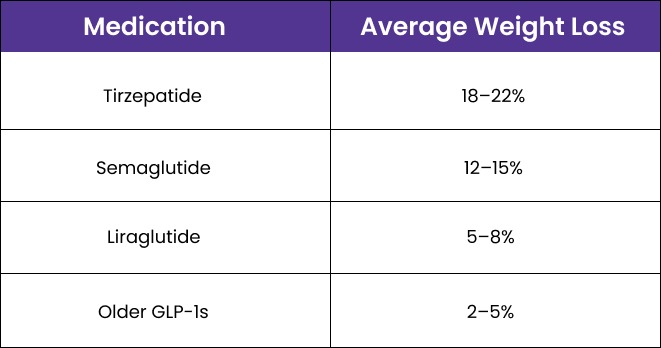
- Weight loss: ~12–15%
- Dosing: Weekly for the injections and daily for the oral versions.
- Results: Strong long-term success
It’s often considered the first-line treatment because of its balance between effectiveness and safety.
If GLP-1 medications were cars, semaglutide would be the reliable, fuel-efficient sedan, trusted and widely used.
-
Tirzepatide-Based Medications(Are The Most Powerful Option currently available for weight loss)
- Zepbound® (weight loss)
- Mounjaro® (diabetes, used for weight loss)
Now let’s talk about the heavyweight champion – tirzepatide.
This medication works on two hormones receptors (GLP-1 + GIP), making it more powerful.
What to Expect:
- Weight loss: ~18–22%
- Dosing: Weekly injection
- Effectiveness: Higher fat loss than semaglutide
Many experts now consider this the most effective obesity medication available.
Think of it as a high-performance sports car, faster and more powerful but still requires proper guidance.
-
Liraglutide/ The Older Alternative
- Saxenda® (daily injection)
Before newer drugs arrived, liraglutide was a common option
What to Expect:
- Weight loss: ~5–8%
- Dosing: Daily injection
- Effectiveness: Moderate
While not as powerful, it’s still useful when newer medications aren’t accessible.
-
Oforglipron – The New Oral GLP
A true oral GLP-1 (no injections)
- Easier to take than older oral options
- Promising weight-loss results in trials, and just recently approved On April/2026
- Average weight loss in the trial showed around (12.4%)
This could make treatment more accessible for people who dislike injections.
Imagine getting the benefits of GLP-1 therapy in a simple daily pill, that’s a huge shift
-
Future of GLP-1: Drugs in Development
The future looks even more promising.
- Retatrutide (Triple Hormone Therapy)
It’s currently in late-Phase 3 clinical trials and is not yet FDA approved for public use.
Targets GLP-1 + GIP + glucagon
Early results: up to 24% weight loss
If Phase 3 results remain successful, experts anticipate FDA approval could occur as early as late 2026 or 2027.
-
Next-Generation Trends
- Higher-dose options
- Longer-lasting injections
- Combination therapies
The direction is clear: More convenience + more effectiveness
How Much Weight Can You Lose?
Here’s a realistic comparison:
Health Benefits Beyond Weight Loss
- Improved blood pressure
- Better blood sugar control
- Reduced heart disease risk
- Relief from joint pain
- Improved sleep apnea
This isn’t just about looking better, it’s about feeling healthier and living longer.
Who Should Consider GLP-1 Therapy?
These medications are typically recommended for:
- BMI ≥ 30 (obesity)
- BMI ≥ 27 with health conditions (like diabetes , hypertension ,heart disease ,HLP,OSA,Fatty liver, or POS)
Ideal Candidates:
- People who feel constantly hungry
- Those who regain weight after dieting
- Individuals with metabolic issues
If dieting feels like an uphill battle, this could be the support system your body needs.
Side Effects: What to Expect
Like any medication, GLP-1 drugs come with side effects.
Common Ones:
- Nausea
- Feeling overly full
- Constipation or diarrhea
The good news?
These usually improve as your body adjusts.
Important Reality Check
Let’s be honest, these medications are powerful, but they’re not magic.
For Best Results:
- Maintain healthy eating habits (→ See our Step-by-Step GLP-1 Agonists Diet Guide for exactly what to eat)
- Stay physically active
- Plan for long-term use
- Work with a healthcare professional
If you stop suddenly, weight regain can happen. Think of these drugs as a long-term strategy, not a quick fix.
Final Thoughts
GLP-1 agonists for weight loss have completely reshaped obesity treatment in 2026.
- Most effective: Tirzepatide
- Most established: Semaglutide
- Emerging star: Orforglipron
- Future leader: Retatrutide
For many people, these medications finally address the root cause of weight gain, biology, not just behavior.
And that changes everything.
Results of weight loss are always better when those medications are combined with lifestyle changes.

