
If you’ve been searching for what exercise burns the most belly fat for females, you’ve probably run into the same recycled lists. Crunches. Planks. Maybe some mention of HIIT. And while none of that is wrong, it’s not the full picture either.
Here’s what most articles skip: you can’t choose where your body burns fat. But you can choose workouts that push your body into a fat-burning state faster, keep it there longer, and actually build the kind of physique where belly fat doesn’t keep coming back.
These are the exercises that do that.
Why Belly Fat Is Different for Women
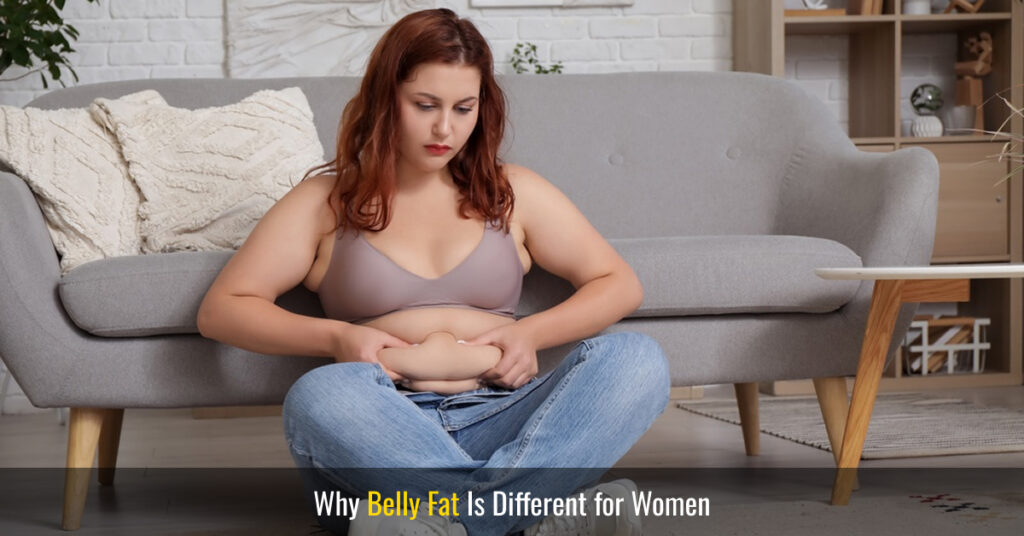
Before getting into the workouts, it’s worth understanding what you’re dealing with. Women tend to store more fat around the abdomen – especially after 30 – partly because of estrogen fluctuations, partly because of cortisol (the stress hormone, which loves depositing fat around the midsection), and partly because of how female metabolism shifts over time.
That means the most effective approach isn’t just “burn more calories.” It’s workouts that manage cortisol, build muscle, and keep your metabolism elevated after you’ve stopped moving.
The Best Exercises That Burn Belly Fat for Females
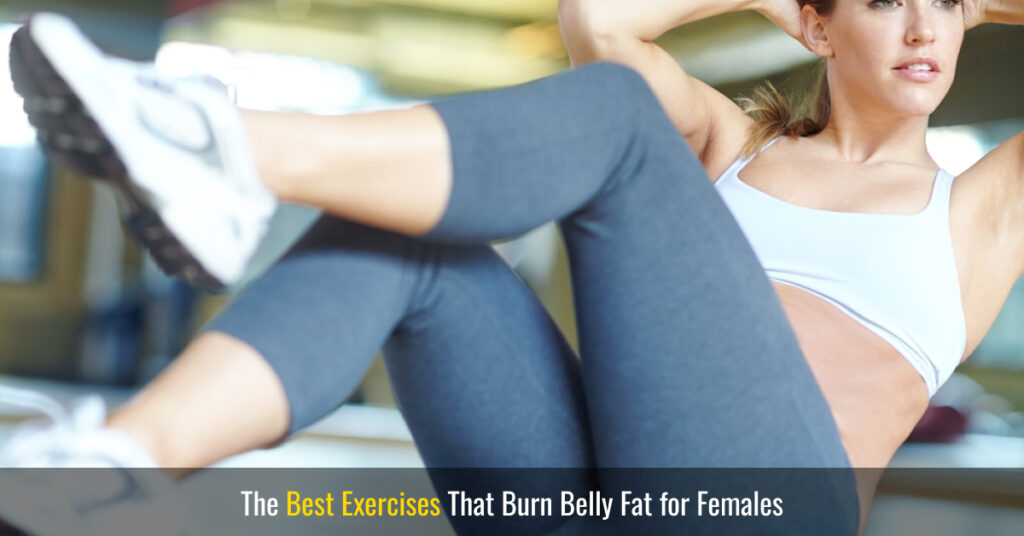
1. HIIT (High-Intensity Interval Training)
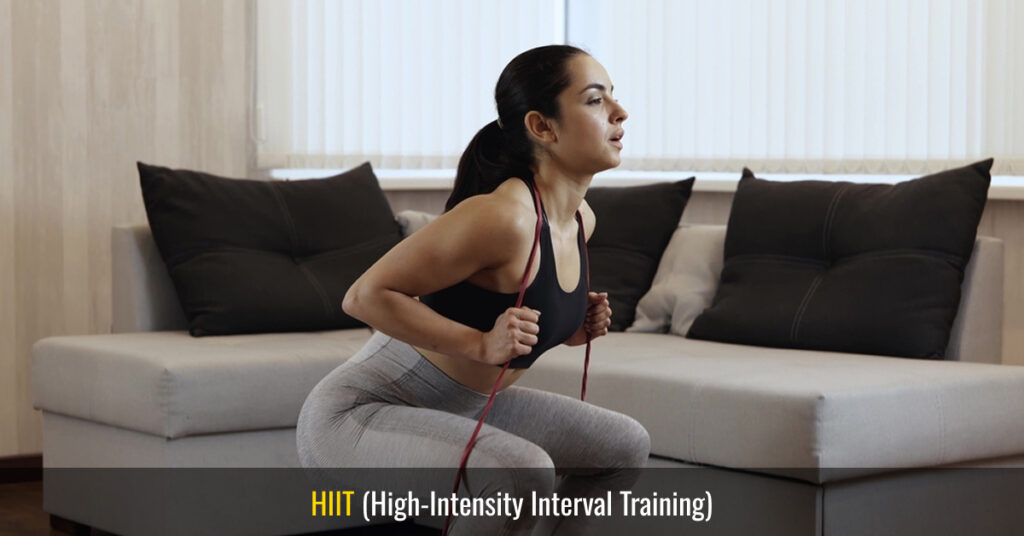
What it is: Short bursts of intense effort – sprints, jump squats, burpees – followed by brief rest periods. A typical session runs 20–30 minutes.
Why it works: HIIT triggers something called excess post-exercise oxygen consumption (EPOC) , your body keeps burning calories for hours after the workout ends. It also spikes growth hormone, which specifically targets visceral fat (the deep belly fat that wraps around organs). Studies consistently show HIIT outperforms steady-state cardio for abdominal fat loss, particularly in women.
How to start: Try 20 seconds on, 40 seconds off. Eight rounds. That’s less than 10 minutes – and it’s genuinely harder than it sounds.
2. Strength Training
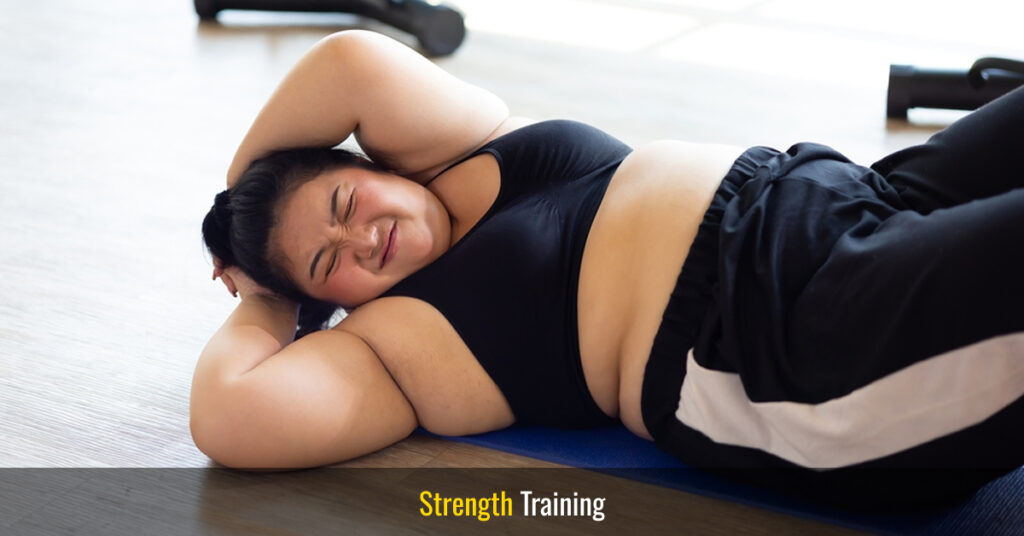
What it is: Lifting weights or using resistance bands to build muscle. Compound movements – squats, deadlifts, rows, presses, give you the most return per session.
Why it works: Muscle tissue burns more calories at rest than fat does. More muscle means a faster resting metabolism, which means your body burns more fat even on days you don’t work out. Women who skip strength training in favour of cardio often plateau quickly; adding even two sessions a week changes the equation significantly.
How to start:Three sets of 8–10 reps on four or five compound exercises, twice a week. If you’re not sure where to begin, this 30-minute at-home strength training routine is a practical starting point – no gym required. You don’t need heavy weights to start seeing results.
3. Walking (Especially Brisk or Incline Walking)
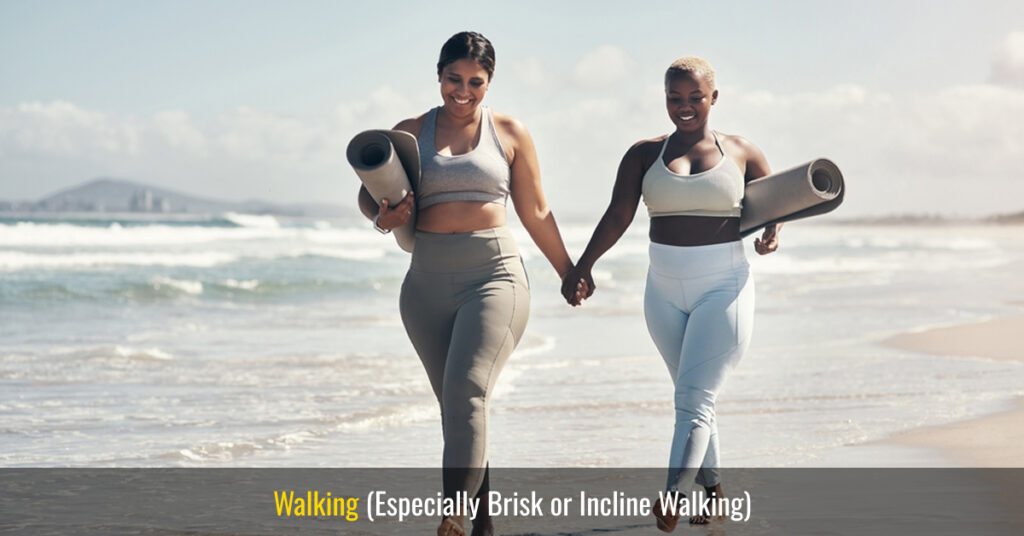
What it is: Steady-paced walking at a challenging enough speed or incline to elevate your heart rate into the fat-burning zone (roughly 50–65% of max heart rate).
Why it works: Unlike high-intensity exercise, walking keeps cortisol low. For women who are already stressed, doing intense workouts every day can actually make belly fat worse, elevated cortisol tells your body to hold onto abdominal fat. Walking burns fat without that hormonal cost. It’s also something you can do daily without recovery time.
How to start: 30–45 minutes at a pace where you can talk but wouldn’t want to. Add incline if you want to increase the burn without increasing stress on your joints.
4. Cycling (Indoor or Outdoor)
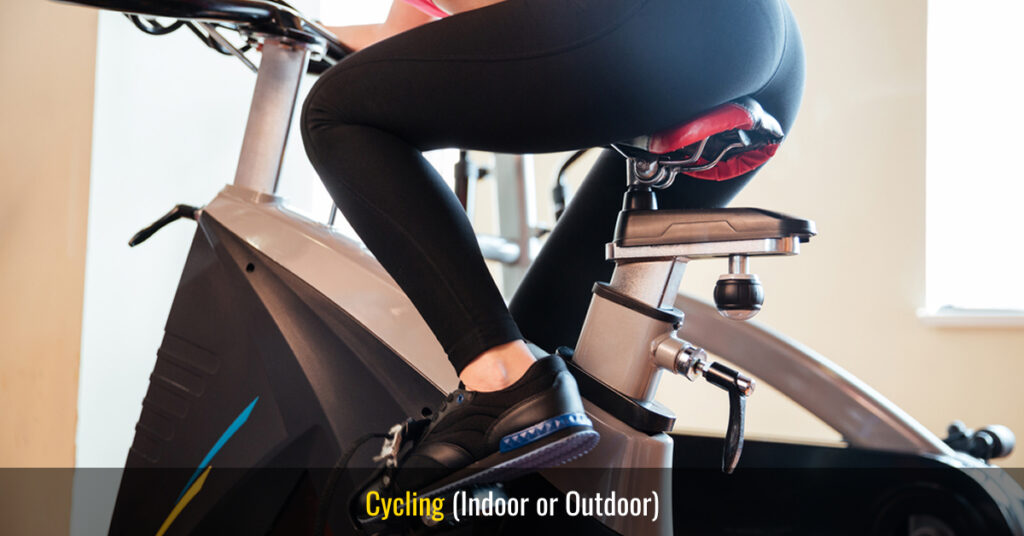
What it is: Sustained cardio on a bike, whether that’s a spin class, a stationary bike, or actual outdoor riding.
Why it works: Cycling is low-impact, which matters if joint pain has kept you away from running. It torches calories – a moderate 45-minute session can burn 400–600 calories depending on intensity – and it engages your core throughout, which means you’re working your midsection even when it doesn’t feel like it.
How to start: Three sessions a week, 30–45 minutes each. Vary the intensity: some flat and steady, some with resistance climbs. If you want to get more out of every ride, this guide to weight loss and cycling covers how to structure sessions specifically around fat loss, worth reading before you settle into a routine.
5. Pilates
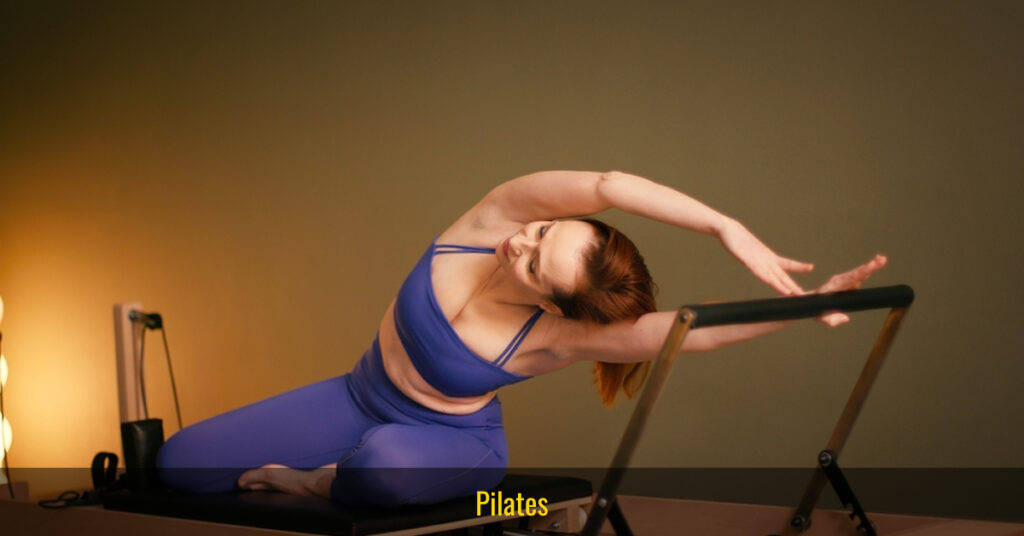
What it is: A low-impact method that focuses on core strength, controlled breathing, and precise movement. Many exercises are done lying down or on a mat.
Why it works: Pilates won’t burn as many calories per session as HIIT, but it directly targets the deep core muscles – transverse abdominis, obliques, pelvic floor – that determine how your midsection looks and feels. It also reduces cortisol measurably, making it one of the best options for women whose belly fat is stress-related. Regular Pilates practice also improves posture, which itself changes how your stomach appears.
How to start: Two to three times a week. Online beginner classes are genuinely good. A 30-minute session is enough.
6. Swimming
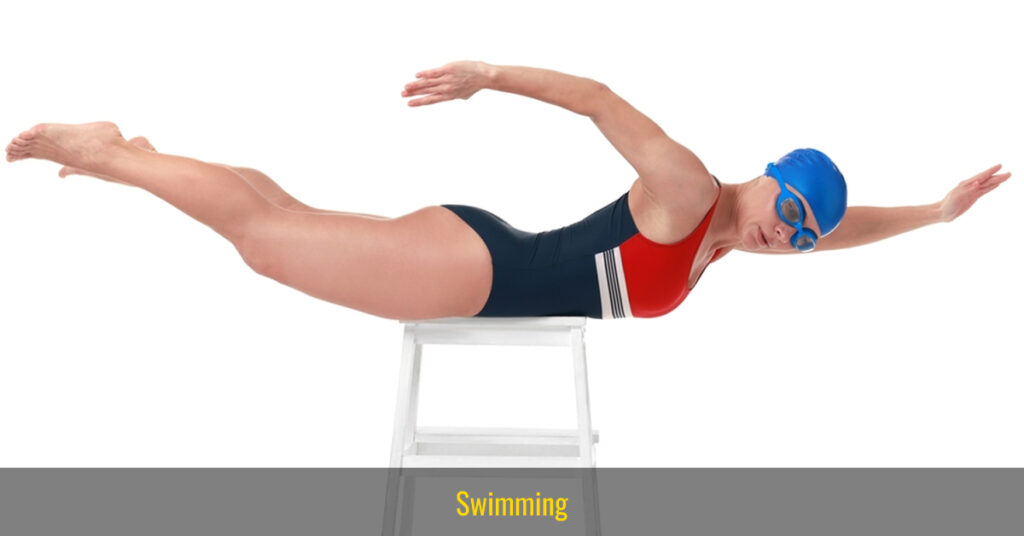
What it is: Full-body cardio in water – freestyle, breaststroke, backstroke, or a combination.
Why it works: Swimming engages almost every muscle group at once, burns significant calories, and is completely joint-friendly. The water resistance means your core is working constantly to stabilize you, even between strokes. It’s also one of the most effective ways to exercise for women with back pain, hip issues, or injuries that rule out land-based training.
How to start: 20–30 minutes of continuous laps, three times a week. Structure matters here more than most people realize, these swimming workouts for weight loss show you exactly how to organize your sessions to maximize calorie burn rather than just putting in laps. If you’re not a strong swimmer, water aerobics gives you most of the same benefits.
7. Jump Rope
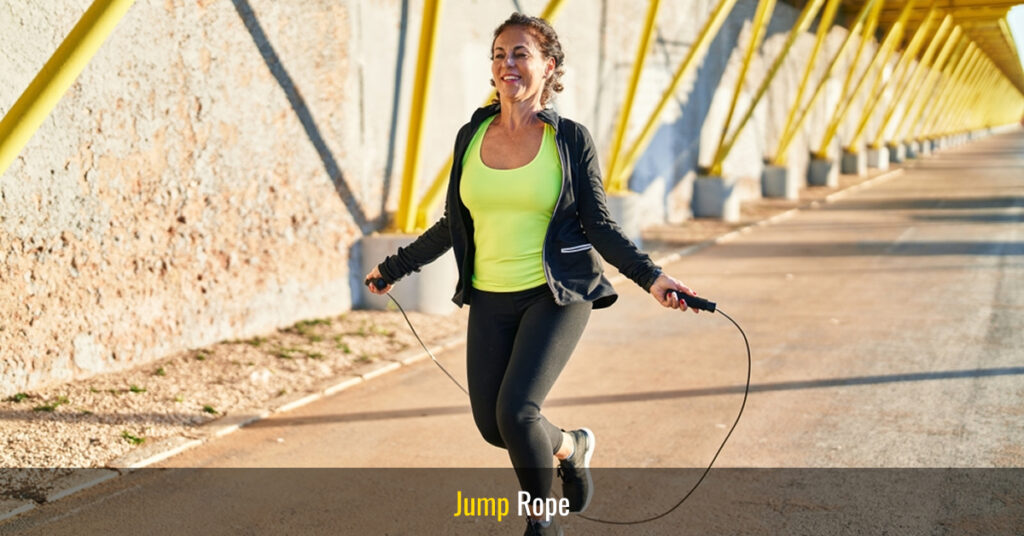
What it is: Skipping rope – either at a steady pace or in intervals.
Why it works: It’s deceptively effective. Ten minutes of jumping rope burns roughly the same calories as an 8-minute mile run. It engages your core for balance and rhythm, elevates your heart rate fast, and builds coordination. It’s also cheap and takes up no space.
How to start: Even 5–10 minutes daily is a solid starting point. Work up to 20-minute interval sessions as your fitness improves.
The Honest Answer About Belly Fat
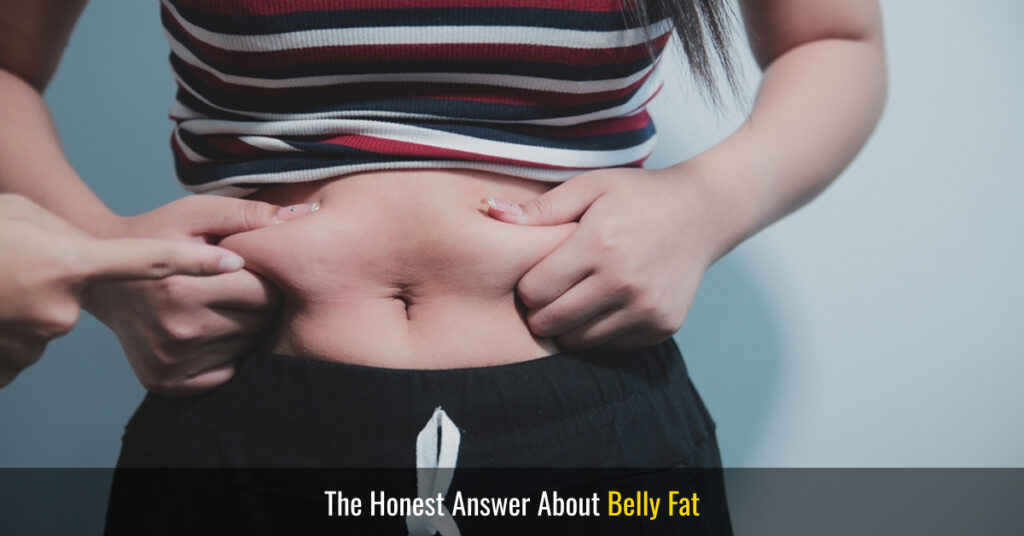
No single exercise specifically targets belly fat, that’s not how the body works. What these workouts do is create the conditions where your body burns fat overall, and the belly tends to be one of the first places women notice the difference when they’re consistent.
The workouts that produce the best results combine strength training (to build muscle and raise your resting metabolism), some form of cardio (HIIT or steady-state, depending on your stress levels), and lifestyle factors, sleep, stress management, and eating enough protein.
Pick two or three exercises from this list that you actually enjoy. That’s the one that’ll work for you, because the best workout is always the one you’ll keep doing.
Frequently Asked Questions
How long does exercise take to reduce belly fat?
Most women start noticing a difference in four to eight weeks of consistent training – but “noticing” varies. Energy levels and how clothes fit tend to change before the scale does. Visible changes to the midsection usually follow six to twelve weeks of regular exercise combined with eating well. Anyone promising faster results than that is selling something.
Is it possible to reduce belly fat solely through exercise without altering my diet?
Technically yes, but slowly. Exercise creates a calorie deficit, and a calorie deficit leads to fat loss. The problem is that exercise alone often increases appetite, which can cancel out the deficit without you realizing it. Most women see significantly faster results when exercise and diet work together – not a strict diet, just enough protein and not eating back all the calories you burned.
How many times a week should I exercise to lose belly fat?
Three to five sessions a week is a realistic sweet spot. More than that without adequate recovery can raise cortisol, which works against belly fat loss. Two of those sessions should ideally involve strength training; the rest can be cardio of your choice. One or two rest days aren’t slacking, they’re part of the process.
Is cardio or strength training better for losing belly fat?
Both, honestly. During a cardio session, more calories are burnt. Strength training increases the amount of muscle that burns calories continuously. The research on long-term fat loss consistently favors combining the two over either one alone. If you only have time for one, strength training has a slight edge because of what it does to your resting metabolism.
Why do I lose fat in my belly last?
For a lot of women, it is, and it’s genuinely frustrating. Belly fat, particularly the deeper visceral fat, is hormonally stubborn. Estrogen and cortisol both influence where fat gets stored and released. This is also why stress management and sleep matter as much as workouts; chronically high cortisol tells your body to protect abdominal fat even when you’re in a deficit.
Do I need to do sit-ups or crunches to get a flat stomach?
No. Crunches work the rectus abdominis (the “six-pack” muscle), but they don’t burn the fat sitting on top of it. A flat stomach comes from losing overall body fat, not from doing ab exercises. That said, core work like Pilates and stability exercises improves posture and muscle tone, which does change how your midsection looks even before the fat is gone.
What’s the single best exercise for belly fat if I can only pick one?
If forced to choose: HIIT. It burns significant calories during the session, keeps burning after, and has the strongest research backing specifically for visceral fat reduction in women. But “the best exercise” you won’t do is worse than “a decent exercise” you’ll stick with. Decide what you will truly be present for.
Conclusion
Belly fat doesn’t vanish because you found the perfect workout. It goes when you stop looking for perfect and start showing up regularly for something that works for you.
The women who see lasting results aren’t the ones doing the most intense program, they’re the ones who picked something sustainable, stuck with it long enough for their body to respond, and didn’t quit when progress felt slow. Because it will feel slow. That’s not a sign something’s wrong. That’s just how fat loss works.
Start with one or two exercises from this list. Walk if that’s what you can do right now. Add strength training when you’re ready. Try HIIT when you want a challenge. The goal isn’t to be perfect from day one, it’s to still be going six months from now.
Your body will catch up. It always does.

