


No gym. No crash diet. Just habits that actually move the needle on belly fat.
If you’ve been searching for how to lose belly fat naturally, you already know the usual advice: do a hundred crunches, jog every morning, and survive on salads. But here’s what most articles skip – a huge part of belly fat reduction happens completely outside the gym. Your daily habits, hormones, sleep, and stress levels have more influence on that stubborn midsection than any single workout.
Why Belly Fat Is Different – and Why It Matters
Not all fat is equal. The fat visible on your belly includes two types: subcutaneous fat (the soft layer just under your skin) and visceral fat (the deeper fat wrapped around your organs). Visceral fat is the more dangerous of the two – it’s metabolically active, pumping out inflammatory chemicals and stress hormones that raise your risk for type 2 diabetes, heart disease, and metabolic syndrome.
The good news is that visceral fat responds well to lifestyle changes, sometimes faster than subcutaneous fat. You do not have to be an athlete to make real progress. What you need is consistency in the right daily habits.

Eight Daily Habits That Help You Lose Belly Fat Naturally
1. Fix Your Sleep Before Anything Else

Poor sleep is one of the most under-discussed drivers of belly fat. When you sleep less than 7 hours, your body produces more cortisol (the stress hormone that tells your body to store fat, especially around the midsection) and less leptin (the hormone that signals fullness). The result: you wake up hungrier, crave high-calorie foods, and your body holds on to fat for energy reserves.
A 2022 study in JAMA Internal Medicine found that adults who extended their sleep from under 6.5 hours to around 8.5 hours consumed about 270 fewer calories per day on average – without any intentional dieting. That’s approximately 28 pounds annually in caloric variation, simply from increased sleep.
.Aim for 7–9 hours. Keep your bedroom cool (around 65–68°F), avoid screens for an hour before bed, and go to sleep at the same time each night.

2. Drink Water Before Every Meal

Drinking 16 oz of water 20–30 minutes before meals reduces calorie intake at that meal by roughly 13%, according to research published in Obesity. Water fills stomach volume, slows the rate at which you eat, and temporarily raises your metabolic rate. Over time, replacing sugary drinks – sodas, sweetened coffees, fruit juices – with water alone can cut hundreds of daily calories without you feeling deprived.
Green tea is another good option. It contains EGCG, a compound shown to increase fat oxidation modestly. It’s not a miracle, but it’s a real, measurable effect.
3. Cut Added Sugar – Especially Liquid Sugar

Added sugar is the biggest dietary driver of visceral fat accumulation. The liver processes fructose (the sugar in high-fructose corn syrup and sucrose) and converts excess amounts directly into fat, which then accumulates around the organs. A 12 oz soda has about 39 grams of sugar – nearly 10 teaspoons.
The practical target: get under 25 grams of added sugar per day (the American Heart Association’s recommendation for women; 36 grams for men). Read labels. Sugar hides in bread, yogurt, granola bars, and salad dressings.
Eight Quick Habit References
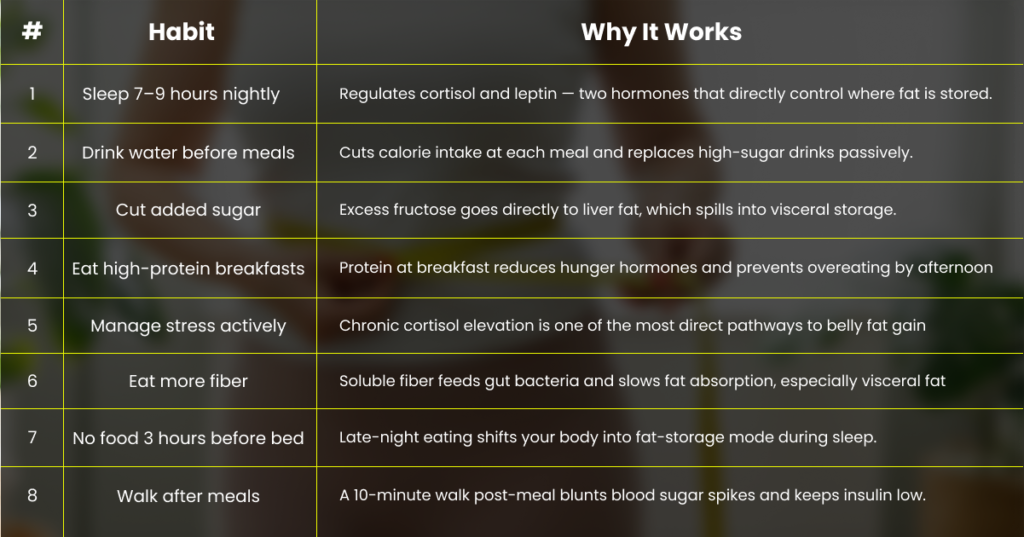
4. Prioritize Protein at Every Meal

Protein is the macronutrient most directly tied to satiety and fat loss without muscle loss. It has a high thermic effect – your body burns about 25–30% of protein calories just digesting it, compared to 6–8% for carbs and 2–3% for fat. Protein also suppresses ghrelin (the hunger hormone) and boosts peptide YY, which makes you feel full.
Good sources: eggs, Greek yogurt, cottage cheese, chicken breast, canned salmon, lentils, and edamame. Aim for at least 25–30 grams per meal. A high-protein breakfast in particular has been shown to reduce overall daily caloric intake by 400+ calories compared to a high-carb breakfast like a bagel or cereal.
5. Manage Stress – It Goes Straight to Your Belly

Chronic stress keeps cortisol chronically elevated. Cortisol tells your body to increase appetite, crave high-energy foods, and store fat centrally – around the abdomen. This isn’t a metaphor. There are cortisol receptors concentrated in abdominal fat cells, which is why stressed people tend to gain weight specifically in the belly even when overall caloric intake hasn’t changed dramatically.
Proven stress reducers: 10–15 minutes of diaphragmatic breathing daily, nature walks, journaling, and limiting news consumption. You don’t need meditation apps or yoga classes (though they work too). You need to get your nervous system out of “fight or flight” long enough for cortisol to drop.
THE CORTISOL–BELLY FAT CONNECTION

6. Eat More Soluble Fiber

Soluble fiber takes in water and creates a gel within your digestive system. This slows down digestion, keeps you full longer, and – critically – feeds your gut microbiome. A well-fed gut produces short-chain fatty acids like butyrate, which reduce inflammation and improve insulin sensitivity. Both factors directly reduce visceral fat accumulation.
One study in Obesity found that every 10-gram increase in daily soluble fiber intake was linked to a 3.7% reduction in visceral belly fat over 5 years. Foods high in soluble fiber: oats, flaxseed, Brussels sprouts, avocados, legumes, and apples.
7. Stop Eating 2–3 Hours Before Bed

Your metabolism slows and insulin sensitivity drops at night. Eating a large meal or heavy snack close to sleep means your body doesn’t have time to process those calories before it enters its lower-activity overnight mode. The result is more energy going into fat storage rather than immediate use. The fix doesn’t require intermittent fasting or skipping dinner – just finishing your last meal by 7–8 PM if possible.
8. Walk After Meals

This one’s underrated. A 10–15 minute walk within 30 minutes of eating significantly blunts post-meal blood glucose spikes. Lower blood glucose means lower insulin response, which means less fat storage. A 2022 meta-analysis in Sports Medicine found that post-meal walking reduced blood sugar spikes by up to 30% compared to sitting. Over hundreds of meals per year, that insulin reduction adds up to a meaningful shift in fat storage patterns.
Common Mistakes That Keep Belly Fat Around
Knowing what not to do is just as useful as knowing what to do. Here are the habits that quietly undermine fat loss:
- Drinking alcohol regularly. Alcohol is metabolized like a toxin — your liver prioritizes clearing it over burning fat. Beer and cocktails are also dense in empty calories.
- Eating “low-fat” processed foods. When manufacturers remove fat, they usually add sugar to compensate for flavor. You end up with the worst of both worlds.
- Skipping meals and then overeating. Skipping breakfast doesn’t automatically reduce calories – it usually causes larger, more impulsive meals later in the day.
- Relying on spot-reduction exercises. Crunches build abdominal muscle but don’t burn the fat sitting on top of it. Fat loss is systemic, not local.
- Chronic cardio without addressing diet. Running a mile burns roughly 100 calories – the equivalent of a small apple. You can’t outrun a bad diet.
- Consuming artificial sweeteners in excess. Some research suggests they alter gut bacteria in ways that worsen insulin sensitivity, though the evidence is still developing.
What to Actually Expect (A Realistic Timeline)
The internet is full of promises about losing belly fat in 2 weeks. Here’s what the research actually supports for someone implementing these habits consistently:
Weeks 1–2: Mostly water weight and bloat reduction. Your pants may fit better. Actual fat loss is beginning but not yet visible.
Weeks 3–6: Measurable fat loss begins, especially if sleep and sugar reduction are in place. Expect 0.5–1 pound of actual fat loss per week. Visceral fat often decreases before subcutaneous fat becomes visually obvious.
Months 2–4: Visible waistline changes for most people. Improved energy, better sleep quality, and reduced cravings reinforce the habits.
The frustrating truth is that belly – especially visceral – fat is often the last to visibly reduce for many people. But it responds faster metabolically than you’d think. Blood sugar and cholesterol improvements often show up on lab work before visible changes appear in the mirror.

Medical Disclaimer: This article serves solely for informational purposes and is not intended as medical advice Always consult a qualified healthcare provider before making significant changes to your diet, sleep habits, or lifestyle – particularly if you have an existing health condition or are taking medication.

